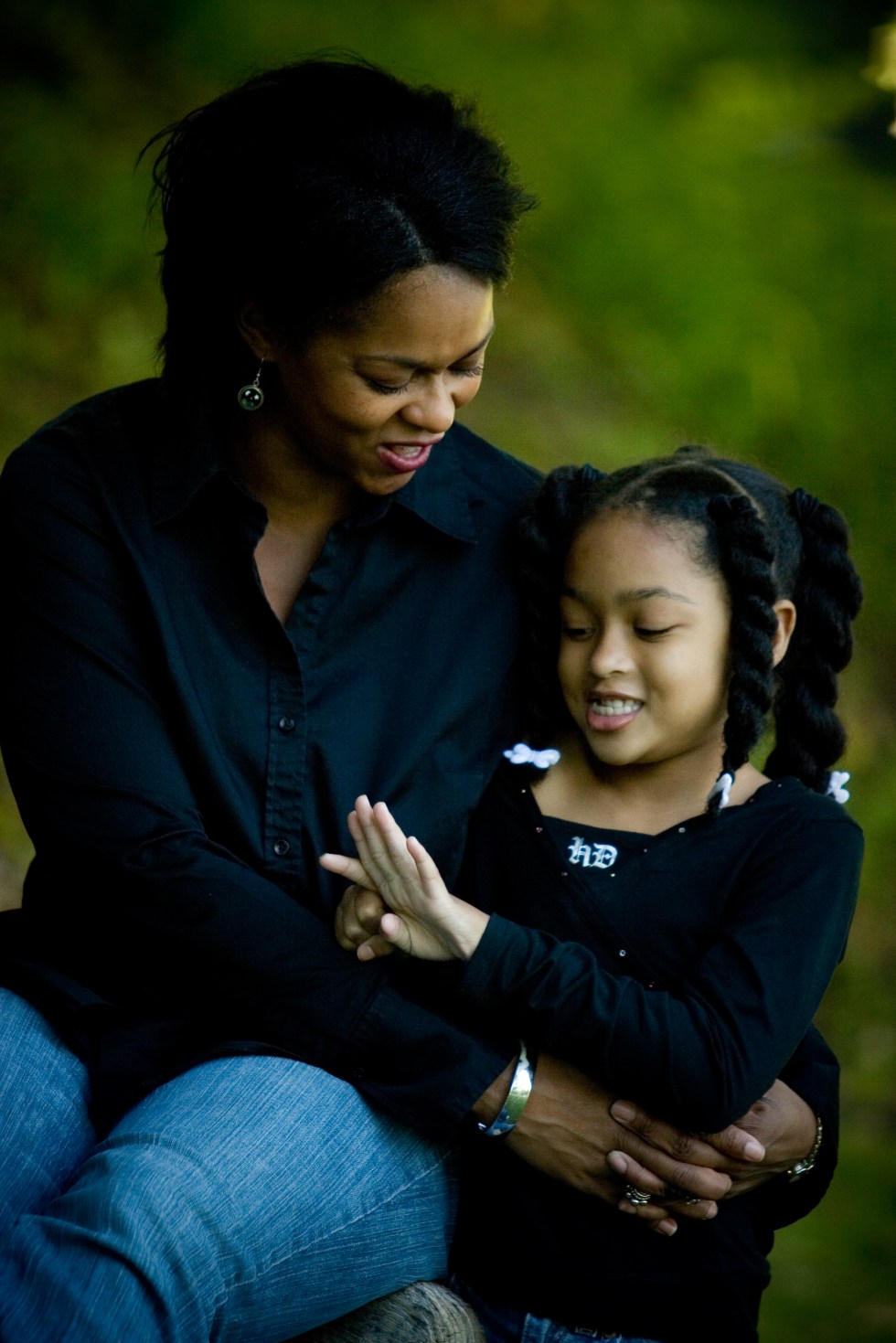
When my daughter was 4 years old McDonald’s was her favorite place to eat out. We always got her the Happy Meal with chicken McNuggets. To this day she’s still not a “burger” person.
One afternoon we stopped at McDonald’s on the way home from pre-school. I placed Lauren’s usual Happy Meal order through the drive-thru speaker.
I drove up to the first window, and the employee opened the window and waited for me to hand him my money. He took my $20 bill, gave me change and the window closed.
I drove up to the second window, it opened, and an employee handed me a small Sprite and a Happy Meal in a bag. I handed the bag and drink to my daughter in the back seat.
As we drove off, my daughter said,
“Mommy, do they talk at this McDonald’s?”
“What do you mean?” I asked.
“The people. They didn’t talk when they took your money, and they didn’t say anything when you got the food.”
Wow. I actually hadn’t even noticed the lack of verbal communication. Me, the Customer Service Queen didn’t even notice. You know why I didn’t notice? Because rote interactions like this are so common that this felt like the norm.
But she was right. Other than the voice coming through the drive-thru speaker, there was no verbal communication.
It just so happened that 5 weeks to the day from this muted drive-thru experience, I was scheduled to deliver a keynote at Hamburger University, on the campus of the McDonald’s worldwide headquarters outside of Chicago.
I’m a storyteller. I had to tell this story to my audience of McDonald’s managers and executives. So I did. I opened my keynote with the story of “Mommy, do they talk at this McDonald’s?”
The audience was stunned. Frozen. Speechless. They may hate me for this, but they needed to hear it. I knew I’d done the right thing. Regardless of how awkward I felt on the big stage at that moment, they needed to hear this.
 De-escalation Training for Customer Service & Soft Skills Training