
Category: Customer Service

This is How to Move Calls to Closure

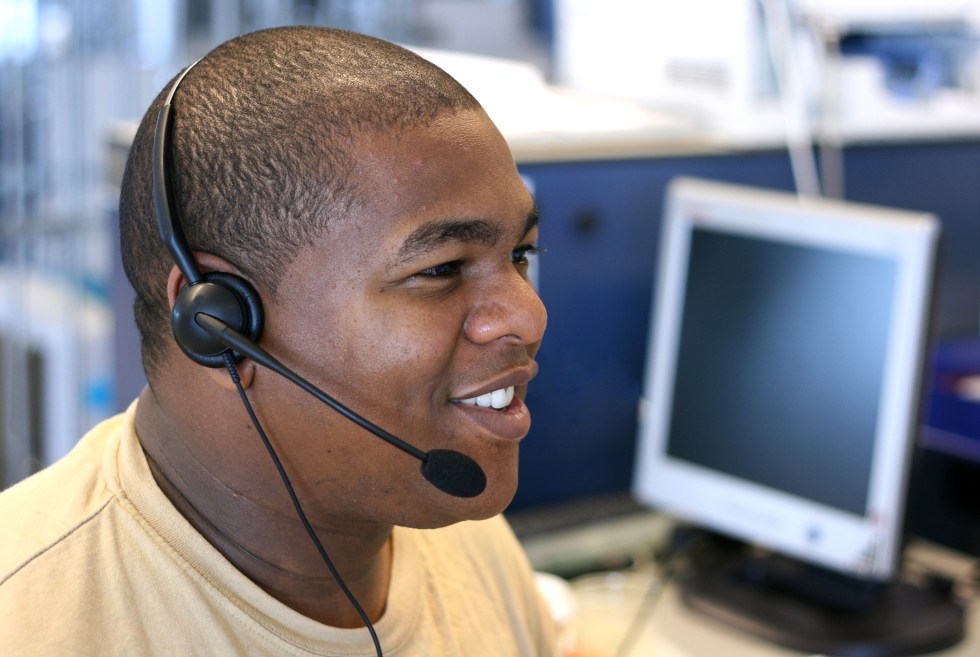
cropped-african-american-csr-istock1.jpg

In a series of events, people remember the first thing, and the last thing, more than anything else. That’s why the way you open a call, and the way you end a call, is so meaningful.

Your call closing must do two things.

You need to share any next steps with your customer; and then, you need to end with a fond farewell. In this article, you’ll learn how to assertively bring calls to closure, and end with a fond farewell.

1. Start the call closure process by giving the customer any next steps.

Sharing next steps lets the customer know the call is almost over, and, this helps you to close the call quickly.

If you have next steps, just, share them. “Alright, Deon. I have processed your return. We’ll go ahead and ship the blue Nike Elite socks, and you should have those within 4-7 business days. You can check the status of your return by logging into our website.”

2. And, then you need to end with a fond farewell.

After you’ve shared any next steps, you move right into the final closure. End with the same energy and friendliness you had when you started the call. Nice farewells include:


20 Damn Good Ways to Express Empathy to a Customer

Nurse Treating Teenage Girl Suffering With Depression

When I hear an excellent, and genuine, expression of empathy from a company, I make a note of it. I’ll tell Siri to capture what I heard, or I’ll just type it out. I catalog ridiculously good empathy statements so that I can share them when I’m helping my clients with compassion.

In customer service workshops, like the one I delivered Friday in Columbus, I challenge my clients to use the empathy expressions I’ve heard (and felt) to inspire them to come up with their own empathic responses. Let’s make believe you’re with me now, in a training session. I share with you 20 of the best empathic expressions I’ve heard. Here they are:

5 Phrases That Make Customers Think Your Employees Don’t Really Care

Screen Shot 2017-03-19 at 8.39.50 PM.png

I was trying to check in for my American Airlines flight on my phone. I was able to get one boarding pass, but not the other. After several failed attempts, I called American and explained my problem. I was transferred quickly and the person I ended up with looked into my itinerary and then said,

“Ms. Golden, this is a system error. You are checked in all the way through to Tulsa. I don’t want you to worry at all. Your flight is confirmed and you are checked in. You have a few options for getting your boarding pass (she gave me 3 easy options), but I want you to know it’s all good. You’re confirmed and checked in.”

I don’t want you to worry at all.

“I don’t want you to worry at all.” was exactly the right thing to say to me. The employee at American zeroed in on my concern that my flight wasn’t confirmed and she perfectly used the right words to acknowledge my concern and put me at ease.

Every interaction your employees have with customers is an opportunity to make the customer experience easy, helpful and friendly. The words your employees use make all of the difference. The lady at American used the right words. The wrong words can cause dis-ease in customers, or leave customers thinking you don’t care. In this article, I’m sharing 5 phrases that cause dis-ease and make customers believe that you don’t care.

1. “The only thing I can do is…”

Customers, especially if they happen to be angry, need options. Never make a client feel pushed into a corner. Even if you know, for example, that you have no appointments available for a customer today, pretend to check before telling them no. Do it this way. “We work on an appointment system. Let me check to see if we have openings today.” Then, “I can get you in tomorrow at 1:00 pm.” That took a few more words than, “The only thing I can do is…” but it sounds so much more helpful.

2. “I can let you talk to my supervisor, but she’s just gonna say the same thing I’ve already told you.”

“Wow” Works for Zappos, But It Won’t Work For You – Here’s Why

03_zappos-employee

A corporate trainer in one of my client organizations is gung-ho on the Zappos culture and she is convinced that what her contact center needs is agents trained to make small talk with customers and empowerment so agents can consistently deliver wow experiences – “Just like Zappos does,” she says.

Now, I love what Zappos has done. I have delivered many a keynote and webinar on the Zappos culture. Zappos is the best at the customer experience, bar none. So understand me when I say this: I respect Zappos. But the Zappos culture will not work for anybody but Zappos.

The Best Advice I’ve Ever Heard For Getting Customer Service Reps to Convey Empathy

Smiling Telephone Operator

Two years ago I was working with a company to help their customer service representatives convey empathy to customers. The intended outcome of the training was for employees to speak to customers with care, concern, and compassion.

Achieving empathy in the customer experience is a bit like walking a tightrope. Too much empathy can result in longer talk times and inappropriate sharing between customer service representatives and clients. Not enough understanding and reps can sound cold and uncaring.

You have to find the right balance in empathy. Or else you fall off the rope, and the customer experience is negatively impacted.

I asked my client how she saw appropriate empathy in her company. And here’s what she said.

Here’s a Great Energizer for Telephone Techniques Training Classes

Group of students sitting in a circle.

In March I facilitated a 2-day Soft Skills training for more than a hundred people for a client in South Dakota. Do you know how hard one must work to keep 100 people fully engaged for 2 full days?

Hard. You have to work hard. And creatively. Of course, one must have endless energy too.

Fortunately I am anointed to engage audiences with boundless energy and stories. But it takes more than that. You have to engage audiences and keep them nearly spellbound. Or else you’ll lose them to their smart phones or thoughts.

I was going into the final inning of this 2-day training in South Dakota. Participants had just returned from lunch. If you’re a seasoned trainer, you know that the hardest part of training is right after lunch. That’s when you are at the greatest risk of losing your audience.

So, here’s what I did. Immediately after lunch I instructed my audience, already clustered in small groups of 8 at round tables, to think of a company. Any company. Small groups thought of all sorts of companies: Wal-Mart, Zappos, a taco restaurant, and pretty much any business you might imagine.