Author: myragolden

Myra is a favorite training partner to Fortune 500 companies with her customized, engaging, behavior-changing (and fun) customer service workshops, working with McDonald’s, Coca-Cola, Frito-Lay, Michelin, Vera Bradley and other brands.

Join My Telephone Skills Online Training. Now in progress.

iStock-635681236.jpg

How did 2017 go for you? Employees still struggling with how to control calls with unreasonable customers? Your customer experience still not where you know it needs to be? Still trying to get your people to convey empathy? I know. The struggle is real.

The real question is: how will you gear up to make 2018 better?

Let me give your people the tactics, skills, and inspiration they need so they can deliver experiences that make you feel proud.

I try to make my training easy – for you, your employees, and even for me, by offering it online. I still do onsite training, of course, but online training saves time and money. And it keeps me off of planes.

There’s no sense stressing over 2017’s results. Let me help your workgroup thrive in 2018.

Imagine 2018….

4 Things Customer Service Agents Can Do to Convey Empathy to Customers

iStock-657293480.jpg

In this article I show you what empathy is using an experience with my teenage daughter, and then I deliver 4 tactical ideas you can apply right now to express empathy: Put yourself in your customer’s place, Sense the Situation From the Customer’s Perspective, Discuss What’s Upsetting the Customer, and Coming Up with Ways to Fix the Problem

My daughter and I were in New York. We’d spent the day sight-seeing, and back at the hotel, my daughter’s iPhone showed all of her photos as blurry – not just the photos she’d taken that day, but every picture on her phone.

To my 17-year old daughter, a problem with photos and her phone camera is catastrophic. It would have been easy for me to dismiss this as, “There are bigger things in life for you to worry about.” And that was my real temptation. But I could see she was distraught over this.

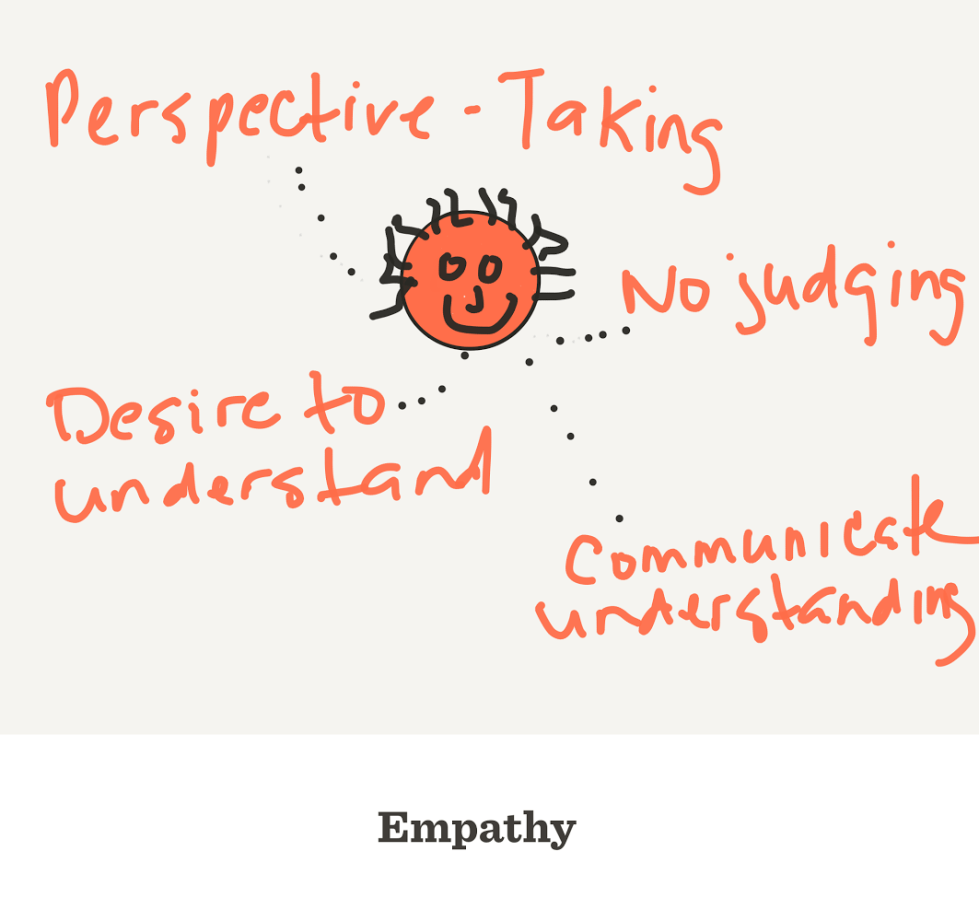
Empathy is putting yourself in another person’s place. Sensing their situation, from their perspective. It’s also discussing the things that are upsetting to the person, maybe coming up with ideas to get them out of the situation they’re in.

So, instead of dismissing my daughter’s photo problem as no big deal (because to me, it wasn’t a big deal), I chose empathy.

This is How You Communicate Empathy to Customers

4 Attributes of Empathy

There are four attributes of empathy, and I teach each of these characteristics in my Empathy eLearning course. One of the characteristics is communicate your understanding.

When your customer is upset, or frustrated, you could communicate your understanding this way:

This is How to Move Calls to Closure

cropped-african-american-csr-istock1.jpg

In a series of events, people remember the first thing, and the last thing, more than anything else. That’s why the way you open a call, and the way you end a call, is so meaningful.

Your call closing must do two things.

You need to share any next steps with your customer; and then, you need to end with a fond farewell. In this article, you’ll learn how to assertively bring calls to closure, and end with a fond farewell.

1. Start the call closure process by giving the customer any next steps.

Sharing next steps lets the customer know the call is almost over, and, this helps you to close the call quickly.

If you have next steps, just, share them. “Alright, Deon. I have processed your return. We’ll go ahead and ship the blue Nike Elite socks, and you should have those within 4-7 business days. You can check the status of your return by logging into our website.”

2. And, then you need to end with a fond farewell.

After you’ve shared any next steps, you move right into the final closure. End with the same energy and friendliness you had when you started the call. Nice farewells include:

How Storyboarding Can Help You Spot and Correct Problems

Learn Paper - 11.png

Before I talk to you about storyboarding, let me tell you about the time I got a job after I complained about poor service.

I was 17, and my mom and I were ready to check out at JCPenney. We couldn’t find a person anywhere in the juniors department. We walked through departments and finally found someone in the boy’s department.

That someone was a middle-aged man in a suit. With the boldness of a brash teenager, I said, “What do you have to do to get service around here? We’ve been trying to spend our money, but no one’s around to take it.”

My mother gasped. The man said he’d get someone to help us and then he dialed a number on a black phone at the desk in the boy’s department. While we waited for that person to show up, I told him how long we’d waited and said,

“This isn’t acceptable. Your people should be here, ready to serve.”

“Do you think you could do better?” he asked.

“Yes, I do.”

“Then, you’re hired.”

“Excuse me?”

“You’re hired. I’m Mr. ____(I don’t remember his last name now). I’m the store manager. You’re hired. I’ll get someone from Human Resources to process the paperwork. When can you start?”

20 Damn Good Ways to Express Empathy to a Customer

Nurse Treating Teenage Girl Suffering With Depression

When I hear an excellent, and genuine, expression of empathy from a company, I make a note of it. I’ll tell Siri to capture what I heard, or I’ll just type it out. I catalog ridiculously good empathy statements so that I can share them when I’m helping my clients with compassion.

In customer service workshops, like the one I delivered Friday in Columbus, I challenge my clients to use the empathy expressions I’ve heard (and felt) to inspire them to come up with their own empathic responses. Let’s make believe you’re with me now, in a training session. I share with you 20 of the best empathic expressions I’ve heard. Here they are: