Author: myragolden

Myra is a favorite training partner to Fortune 500 companies with her customized, engaging, behavior-changing (and fun) customer service workshops, working with McDonald’s, Coca-Cola, Frito-Lay, Michelin, Vera Bradley and other brands.

The Only Vocal Tone Your Employees Should Be Using With Customers

iStock-855839768.jpg

There are pretty much three voice tones you can use with customers.

1. Authoritative

This is the tone you’d use when disciplining a child or if you’re a police officer working to assert your authority. Rarely, if ever, would you use this tone with a customer. Having said this, you might have to speak authoritatively if a customer crosses the line and is profane or disrespectful.

The Authoritative Tone Can Come Across:

3 De-escalation Techniques Gayle King Used In the Emotional R. Kelly Interview

TM6W6MSAFAI6TBNNO6PPAX6Z3A

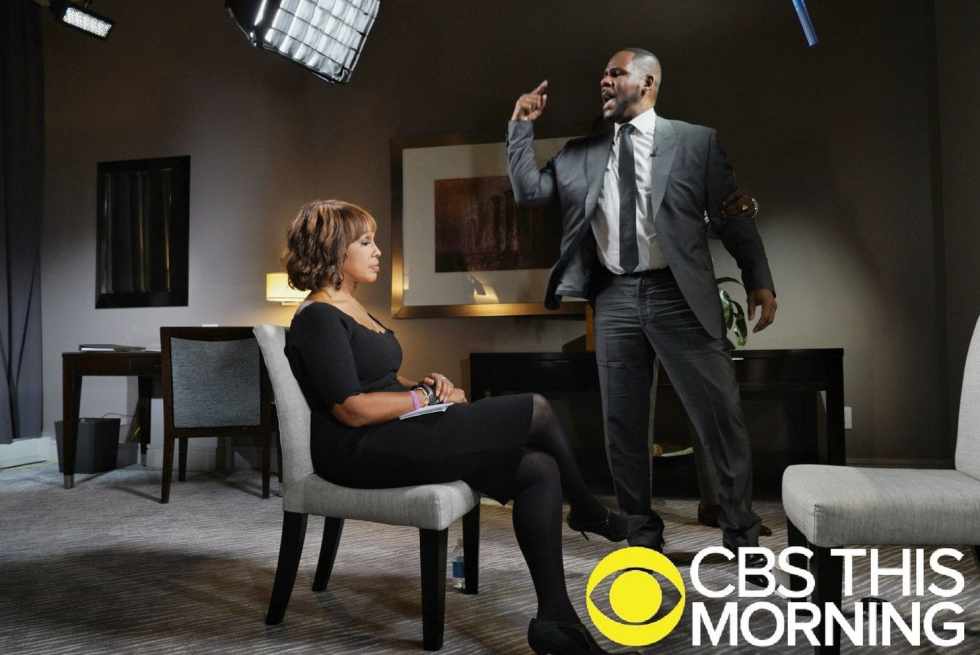
Gayle King, CBS This Morning co-host, sat down with an emotional R. Kelly to talk about his allegations of sexual abuse. In the interview, King maintained a calm and steady focus using three key de-escalation tactics, which also work very well in intense customer interactions. 

In the interview, the singer cries, rants at the camera, beats his chest, and stands, towering over Gayle King with warlike body language. The CBS This Morning crew stopped the interview to give R. Kelly the chance to compose himself. (Back on camera, he’d failed to cool down.)

R. Kelly’s emotional eruption was astonishing, but the stunner for me was Gayle King’s calm presence, and focus while the singer platformed over her. I played the video three times to take in Gayle’s unflappable countenance. She was as calm as the moon.

After R. Kelley’s theatrical performance aired on CBS This Morning, co-host Norah O’Donnell awed, “You remained both tough and calm throughout that.” And to that observation, Gayle rationalized, “It wouldn’t do any good if we both got hysterical, or if we both got very emotional.”

This point right here is why R. Kelly and Gayle King are on my blog today – “It wouldn’t do any good if we both got hysterical or if we both got very emotional.”

Customers will rant, verbally attack, and maybe even be intimidating. It’s unfair, but it happens. Your best response to an unreasonable and emotional customer is to remain unflappable, just as Gayle King did in this now-viral interview.

Here’s a close look at three techniques King used tactically to help her remain calm and focused throughout the dramatic sit-down, three techniques that will help you stand unflappable with demanding and unreasonable customers. I’ve also included a video of portions of the interview for you to study Gayle’s de-escalation techniques. 
10 Takeaways Your Employees Get From My Telephone Skills Online Training

Businesswoman

Maya Angelou once said, “People will forget what you said. They will forget what you did. But, people will never forget how you made them feel.” That point right there – people will never forget how you made them feel – is why we created this course.

This training is about never having your customers hang up with negative feelings about how you talked to them. Here are 10 Takeaways Your Employees Get From My Telephone Skills Training.


  1. Three keys for how to make the most of the first six seconds of a phone call
  2. How to bridge into questions so you sound friendly and helpful
  3. The art of yielding, so you don’t accidentally over-talk your customers
  4. Discover why speaking in complete sentences improves the perception of friendliness and helps you build rapport
  5. Exactly how to gracefully handle dead airspace so you avoid that awkward uncomfortableness on the phone

How to De-escalate Using the Snatch and Flip Technique

And Boom.001

When your customer furiously tears in, not letting you pinch in so much as “um hmmm,” regain control using the Snatch and Flip technique. Here’s what you do.

1. Listen (Try to be fully present, listening without annoyance.)

2. Identify the subject that has hacked the customer off. (This tends to be the thing they bring up repeatedly.)

3. Snatch the topic and jump in, and immediately flip the conversation to how you might help. (Think of timing your entrance into a game of jump rope – you have to find the exact right second, or you’ll trip on the rope.)

If your customer’s real issue is the rental car broke down, but she’s venting about her hungry and irritated kids, and how your company put her in this position, you snatch the topic of her kids and then flip into problem-solving. Like this.

“I want to get you back to your kids quickly. So let me find out exactly where you’re located so we can send out a replacement vehicle.”

Steps one and two are easy. You do this every day. The Snatch and Flip take some practice. Let me walk you through exactly how to pull this off.

The One Word That Makes Customers Accept Your Word As Final

Front view portrait of operator man with headset

If you say “because” when you’re telling a customer something, you’ll significantly increase the chance that they’ll accept your word as final.

Here’s Why Saying “Because” Works

Research by psychologist Ellen Langer found that saying “because” and then tossing out a reason as insignificant as a discarded rubber band got people to agree. In her research, Ellen created a scenario where a person wanted to cut in line to use a copier in a library, and the request was made in three different ways:

1. “Excuse me. I have five pages. May I use the Xerox machine?”

60% of the time this question worked, and the person was able to cut in line.

2. “Excuse me. I have five pages. May I use the Xerox machine because I have to make some copies?”

This absurd reason worked 93% of the time.

3. “Excuse me. I have five pages. May I use the Xerox machine because I’m in a rush?”

Pleading with urgency, even with a ludicrous need, upped the success rate to 94%.

Using the “because” tactic can increase the chances of a customer accepting your word as final. I teach and role-play this strategy in my de-escalation workshops.

Here’s all you have to do to use the “because” tactic for de-escalation.

5 Reasons Why You’re a Rookie At De-escalating

bored young female professional working for a call center

Inflammatory words and an aggressive tone heat up an interaction like an oven heats up a room. The five biggest mistakes I see customer service professionals make when talking to upset customers are:

Aggressive tone – A direct or authoritative tone will quickly lead to an escalation in aggression or to a supervisor.

Making threats – Spitting off, “Calm down or I can’t help you” will assuredly not make a customer calm down.

Repeating your point – Repetition doesn’t make your point stronger. It annoys, or worse, infuriates your customer.

Pushing back – Getting aggressive or hostile because your customer pushes you shows weakness, and your customer will push harder.

Playing the antagonist role – Disagreeing and pointing out where your customer is wrong intensifies the interaction.

Let’s walk through the five big rookie mistakes, and see how an all-star would handle each of these situations.

Try Standing Like Wonder Woman For 2 Minutes Before Talking To An Employee About a Problem – You’ll Feel More Confident and Powerful

iStock-511976366.jpg

If you go to a restroom stall and stand with your hands on your hips and point your elbows outward and hold that position for two minutes, you’ll perform very well in stressful situations. Like when you talk to an employee about a performance problem, or when you go into a big meeting without all the answers you need.

Sounds crazy, I know.

We go live with scene one in less than seven minutes. The room is bright as day with all of the studio lights. Props to create our mock optometry office make me feel crowded in the tiny set made even smaller by the intimidating presence of my director and producer, and the production assistant.

But I’m as calm as a bathtub.

I’m looking down the barrel of the camera with my hands on my hips; elbows bowed outward. I’m standing like Wonder Woman. And this is why I’m entirely at ease.

img_2323

Research Says Standing Like Wonder Woman For 2 Minutes Helps You Handle Stressful Situations Very Well (Like job interviews, talking about a tough problem, etc.)

In her body language studies, Harvard Business School professor, Amy Cuddy, made some astonishing findings. When people stand akimbo, like Super Man or Wonder Woman, for 120 seconds, they feel more powerful.

Cuddy’s research showed that when people stand with their hands on their hips with elbows turned outward, they get these benefits:

The Fastest Way to De-escalate Is To Use Your Customer’s Last 3 Words

Successful businesswoman in suit with arrogant expression

When you have an enraged customer on the phone or in front of you, nothing threads the needle like mirroring the customer’s words. Copying the customer’s angry expressions makes the customer feel heard and understood. When the unreasonable customer feels like you’re listening is when they go from a boil to a simmer.

There are only three things you have to remember to do with mirroring.

  1. Copy the last three words the customer mouths
  2. Pause for a beat
  3. Repeat

Mirror the customer’s last three words

The most critical part of mirroring to de-escalate is to merely repeat back the last three words (or the critical one to three words) your customer mouthed, and put a question mark in your voice.

I learned the three-word technique from former FBI hostage negotiator Chris Voss in his book, “Never Split the Difference: Negotiate Like Your Life Depends On It.”

Let me walk you through this.

Eliminate Your Fears And Doubts About Coaching Problem Employees

Powerful black businesswoman leader in the meeting

One of the things I’m working on for you in 2019 is giving you tools to help you coach your employees and hold them accountable, so they’re positioned to deliver the best possible customer experience.

Eliminate Your Fears and Doubts About Coaching

No one likes to talk to employees about unacceptable performance, but for a lot of us, talking to people about problems with performance is a regular part of managing. You know the feeling – you probably get a little nervous, or you put off having the discussion about issues, hoping things will self-correct. It’s time to get over your fears about coaching.

Behind The Scenes Look at My Filming at LinkedIn Learning

For two years I’ve partnered with LinkedIn Learning to create courses to help employees be more assured and skilled in their ability to handle demanding customers.

Here are some behind the scenes photos from my visit last week to LinkedIn Learning to film two new training courses.

img_2310
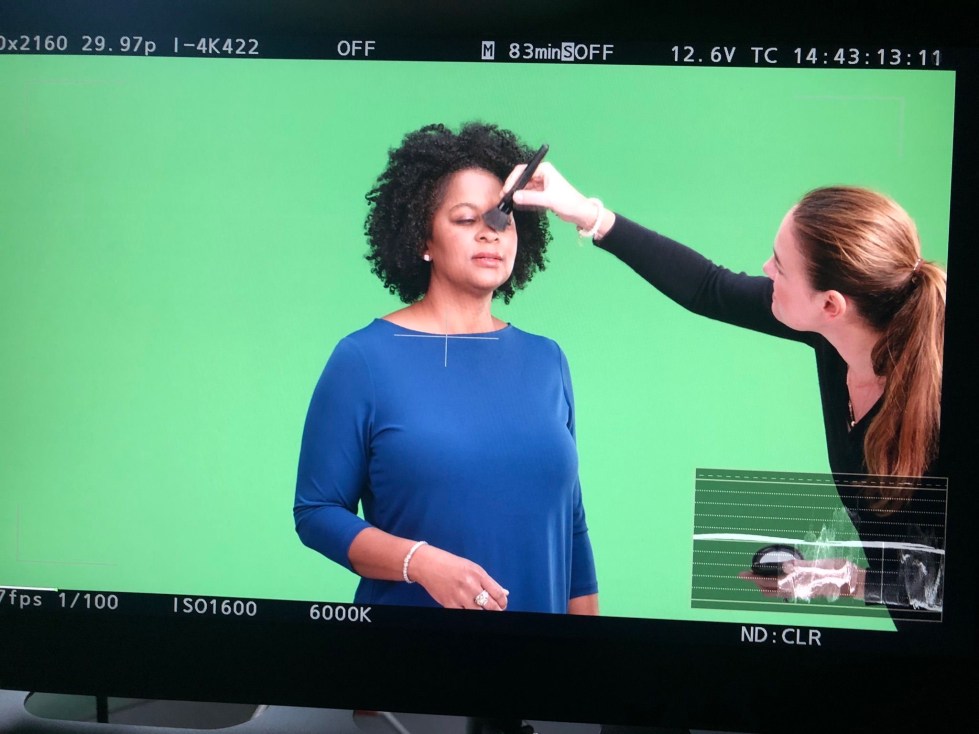
Brilliant make-up artist, Tomeko, keeps me looking good on the set.
img_2322-2
What I like about being on set is filming only from the waist up. If only I could facilitate workshops in leggings and ballet flats!